|
| Is Bridget OK? |
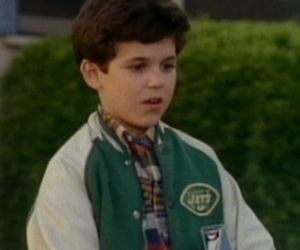
One of the best things about Mad Men was that, after its first season, it managed to stop trying to convince us to see the way things were back then and to prove its historical accuracy to the 1960's through awkward bits of dialogue and props. Even shows like The Wonder Years never quite got beyond this stage (though I always appreciated Kevin Arnold's authentic 1969 Jets jacket).
In Season 1, much of the show's work of giving us a sense of the times comes through the character of Betty Draper, whose hands keep locking up for no apparent reason in Episode 2. I had forgotten about this part of her storyline. It's as if her body is rebelling against her need to simply move on after the death of her mother. Standing with Mona Sterling in front of the mirror in the Ladies Room of Toots Shor's, Betty stammers out the time since the death of her Mom, realizing that it's actually further away from what she thought - it's been three, not two months. It feels sooner, but the two need to keep applying makeup; they've stood there too long, and the matrons of the Ladies' Room are eager to let other ladies use the mirror. It's a long night for other people, too.
 |
| Betty on the couch. |
Betty's interior world slips out again and again in this episode, and to be honest, what I had forgotten was how genuinely helpless and frightened she seems. She isn't the Ice Queen yet, eager to snuff out other people's passions as quickly as hers have been. She is sharp with Sally, of course; when Sally arrives with the laundry bag over her head, Betty upbraids her because she assumes that her daughter has messed up the dress that it came in (Sally's also wearing it because she is playing the role of astronaut; Mad Men challenged us early on to see two different metaphors in one). Betty's trips to the psychiatrist are going to mark her permanently; it'll be the first real betrayal she'll feel from her husband, and it's going to hurt. But it will lay a foundation for dealing with everything else he's going to do to her down the road.
In Episodes 1 and 2, Don Draper is still trying to get a handle on how to be in this world he looked into for so long and is now a part of. In last week's episode, he insulted a female client for speaking to him directly; he disregarded the advice of Dr. Guttman on the human death wish (an idea he will unconsciously bring to Sheraton in Season Six with "Hawaii- The Jumping Off Point") and Sterling has to remind him that he's still missed a button on his shirt. He has a gift, but the gift is still a little ahead of him, not behind him as it seems to be in Season Six. He manages to be the Don we will recognize more and more by silencing Paul Kinsey and the other boys with, "Maybe I should stop paying you," when they don't produce what he wants.
But when Betty tells Don that she's still struggling with her anxiety, he looks at her as a boy would with a toy that he thought had been fixed but he now realizes is still broken. He doesn't recognize that this is what starts him wondering about what women want. Advertising really is all about psychology, even (or especially) when the advertisers themselves don't recognize how that relationship works.

"You're the new girl," Joan tells her, with a mixture of malice and curious jealousy. "And to tell you the truth," she adds, "you're not much, so enjoy it while it lasts." But when it's Peggy's turn to cry in the Ladies Room, she sees yet another one of the disposable women in the office crying. So Peggy looks in the mirror and finds the strength not to do it.
One interesting note is how lousy the character of Kenny Cosgrove seems. He's just another one of the predatory but wimpy boys in the office who talk a big game about "going to zoo and seeing some animals." It's hard to reconcile this Ken with the one who will develop into a science fiction writer, or the author of "The Miniature Orchestra." Urging the other boys in the office to be impolite to women so that they'll know how to treat the boys isn't the Kenny we come to know and like, but he's in there, apparently.
***
One additional heavy-handed cue to the history of the times is the short-lived work that Sterling Cooper does for the Nixon campaign in 1960. As if to dramatize the dynamics of the race, Cooper emphasizes to Don the importance of advertising's growing role in politics by saying, "the last eight years have been good to us because they've been good to Procter and Gamble and the United Fruit Company." What's been bad for peasants in Latin America in an era of American corporate dominance is good to a bunch of executives in New York who themselves serve the monsters who keep the cities at their feet, as Robinson Jeffers might say.
A bit heavy, yes, but then we remember that in Draper's office, his minions are fiddling around with the new aerosol technology available through Right Guard (I still remember the smell of it). Just as Cooper says, "We'll give our people what they want," someone inside his office manages to find a way to light the flame of an aerosol spray, and the resulting, brief flash of fire seems to emanate from Cooper's head. That was the moment that sold me on the show. Advertising keeps business as usual in countries whose politics are dictated by United Fruit and the CIA, and it will also encourage the use of a product that will punch holes in the Earth's atmosphere. It is the devil. Still heavy-handed, but two metaphors in one again, and clever all the same.
But the best of it all is that Right Guard is the key to answering the main question of the episode. Don decides that what women want is merely to get closer to men. Whether or not he (or Midge, with whom he wakes up the morning he thinks of it) really believes it is not important. It never is.
***
In Seasons 1 and 2, African-American characters are in the background of events, but they are given two dimensions of substance that act as commentary on the privilege of the white principals. At the show's outset, Don engages the black waiter in a conversation about brand loyalty to cigarettes after assuring the menacing white bartender that the old man isn't just being "chatty." The matrons in the Ladies Room of Toots notice how cheap the new rich white people are with tips.
 |
| (Samuel's right behind Peggy.) |
My favorite is Samuel, the guy who works the "pie cart." Using "Negro slang," Kinsey tells him, "That drape, man, it's sadder than a map." Samuel, giving him no real expression, says, "Well, it's lightweight, and it tells me I'm at work" - a perfect response to a white advertising executive's criticism of a black working man's uniform. It's spoken like a utilitarian ad-line, and Kinsey doesn't even notice.
"But you sure can talk, Mr. Kinsey," he adds, with very little enthusiasm.
Pie-cart man 1 Kinsey 0.
"But you sure can talk, Mr. Kinsey," he adds, with very little enthusiasm.
Pie-cart man 1 Kinsey 0.
Here Mad Men sets the pattern of its use of African-American characters; they provide the occasional (and less frequent as seasons unwind) objective view of the white principal characters. The problem is that by hinting that these characters are more than just backdrop scenery they made me believe characters like these would be three-dimensional in the seasons to come, and they haven't. This opens up the ongoing question about the show - whether it's the show's problem of not addressing the race problems of the 60's with authentic characters or the problems of the 60's advertising world in not seeing African-Americans as authentic citizens and consumers? We know the latter was true, sure, but does that mean it always needs to be so hard for Mad Men?
Kinsey frequently uses slang to appear above the level of intellectual and cultural thought in the field of advertising, and while he seems genuine enough in guiding Peggy around the office, Samuel is the first real clue that Kinsey is just another phony, maybe even the biggest one of all. Kinsey is working on a novel, but Kenny Cosgrove is the real novelist. In fact, it pains me to say it, but it's true: Kinsey was born at the wrong time; today he'd be able to satisfy himself with blogging about television.
Kinsey frequently uses slang to appear above the level of intellectual and cultural thought in the field of advertising, and while he seems genuine enough in guiding Peggy around the office, Samuel is the first real clue that Kinsey is just another phony, maybe even the biggest one of all. Kinsey is working on a novel, but Kenny Cosgrove is the real novelist. In fact, it pains me to say it, but it's true: Kinsey was born at the wrong time; today he'd be able to satisfy himself with blogging about television.